
Discover the fascinating history of music and learn who invented it. Explore the evolution of music and its impact on human experience in ways you never imagined.
Share
We’ve all grooved to a catchy tune or felt chills from a beautiful melody, right? Music runs deep in human culture and history. But have you ever stopped to think about where it all began? Who was the OG musician who started playing notes and creating beats that we now call music?
Honestly, we may never know for sure. The first musician or composer in history is a mystery that remains unsolved. What we do know is that music has been a part of human life for thousands of years, in all corners of the world.
Therefore, it didn’t happen that one day some ancient genius woke up and started “inventing” music; rather, it took millions of years for the gradual development of sound into what it is today. Our previous generation of ancestors made their first musical performances on evidence such as artefacts, art works, among others which modern musicologists use to reconstruct the beginnings of their music.
Let’s dig into what we’ve discovered so far!
However later this changed when people began crafting their own inventions specifically designed for producing musical notes rather than just any noise possible through these accidental instruments! The very oldest dated back to more than 40,000 years ago.
Can you imagine being among the first humans to intentionally arrange sounds into some form of rhythm or melody on one of these primitive flutes? A chill-inducing thought for sure.
There are a few theories about why music may have first appeared. Some researchers speculate that singing, or vocal-based music, could have risen with, or even before, spoken language itself.
The idea is that before we mastered complex linguistics, we would express ourselves using short, repeated melodic sounds or mimicked the noises we hear in nature, like bird calls. Much like the way baby talk today uses exaggerated tones, ancient sing-song communicating could have been one of the earliest forms of music.
Other theories propose that music first served as a social function—singing lullabies to babies, chanting to join in ceremonial dances, or rhythmic melodies providing a pulse to group tasks like grinding grain. Music perhaps gave early humans a sense of unity and groove.
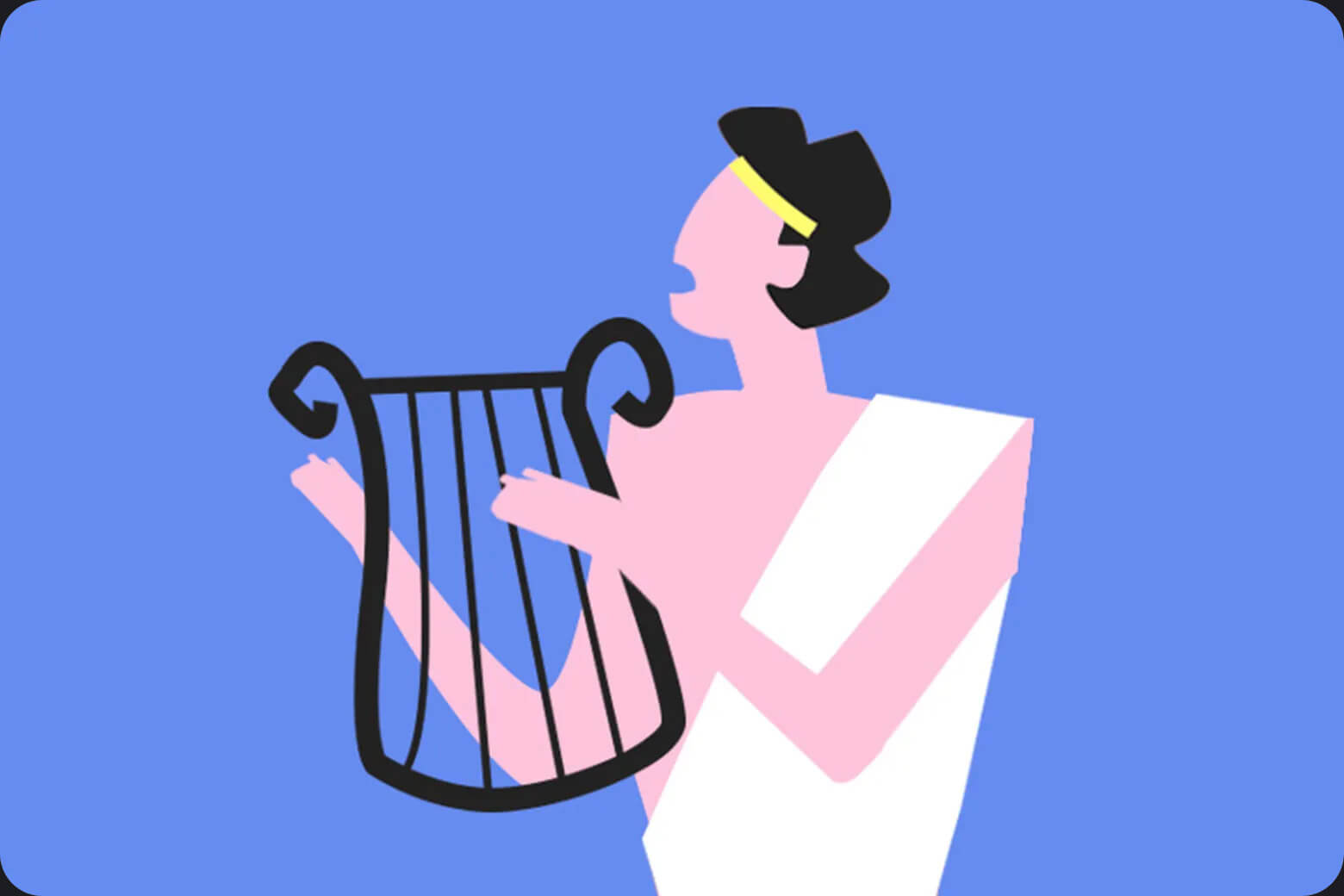
The connection between music and the divine has ancient roots across cultures. Take Greek mythology, where Apollo was lauded as the lyre virtuoso par excellence. Àyàn was the African deity of the drums. In many religions, music facilitated trance states and ritual ceremonies.
For our prehistoric ancestors, perceiving the first purposeful musical patterns may have felt like tapping into something mystic or supernatural. The oldest known images of musical performance are ancient Egyptian tomb art portrayals of harp players, probably sending them off to the spiritual side.
By the time of the earliest known civilizations, such as Mesopotamia and Ancient Greece, music was already a developed creative art form, elevated to sacred spiritual realms. Certain instruments like the lyres, lutes, and flutes held symbolic values in these ancient worlds.
It is amazing how some basic units of music are the same in different cultures, considering the incredible diversity of musical styles and traditions across the globe. Drumming ceremonies have been found by archaeologists in China, Nigeria, and the American Southwest, dating back thousands of years.
Obviously, making rhythmic, percussive sound is a universally human phenomenon imprinted in the ancestral code of our species. Maybe it’s no surprise—our hearts have been beating rhythmically since before we became human!
While the drums themselves were fashioned from wood, animal hides, or clay, anthropologists theorize that drumming circles emerged organically from collectively clapping, stomping, or slapping surfaces in rhythmic timing. If you will, an organic musical technology.
At the end of the day, the history of music isn’t marked by a clear inventor or date of origin. Music has been an innate part of the human experience for longer than our species has existed in its modern form.
Instead of just one source, music slowly emerged from the minds and cultures of our ancestors through phases of exploration, experimentation, and evolution. It may have started with simple, repeated vocal beats or riffs on natural percussive sounds. Over millennia, these seed forms blossomed into the richly expressive musical arts of ancient civilizations.
Today, technologies like streaming make the world’s mind-blowing musical diversity more accessible than ever. From hip-hop beats to the divine violin concertos and ancient melodies of the didgeridoo, humanity’s resilient musical pulse keeps beating on.
We are part of an unbroken line of musical creativity that stretches back tens of thousands of years to our prehistoric roots. So next time you find yourself in a groove, remember—you’re tapping into something deeply primordial yet profoundly human. An ancient gift, born timelessly anew with each listening experience.
Share

Luca is an underground music expert with more than ten years
of DJing and playlist curation,
focusing on new artists. He has appeared at Primavera Pro and BIME Pro, and he writes for the Playlo blog about music news,
tips, and independent artists.
If you seriously can’t live
without us (we get it),
follow us below.
No spam, only great music
from independent artists.
We promise!
By subscribing you agree to our
T&C's and Privacy Policy.
Do you know a great song?
Submit it now and join the
ultimate competition where
any music genre can win.
To provide the best experiences, we use technologies like cookies to store device information. Consenting to these technologies will allow us to process data such as browsing behaviour or unique IDs on this site. Not consenting, may adversely affect certain features and functions.
Added to cart
Check out our shop to see what's available